

User Generated Content (UGC) is your Unicorn
- Karthik Krishna
- Jun 15, 2020
- 6 min read

Updated: Sep 17, 2020
In 2015, Adweek called it “the next big thing.” within the years since, it’s become colossal. In fact, due to the way it makes marketing more authentic and believable, user-generated content (UGC) could also be social media’s most vital contribution to the planet of selling .
A post on the Adweek blog said, “As the planet has shifted to social media, consumers check out fellow consumers to tell their purchasing decisions. rather than watching companies, as they did within the past, they now check out one another and at their favorite personalities.”
In 2016, Salesforce claimed:
· Visitors to websites that include UGC galleries spend 90 percent longer on the location .
· Social campaigns that incorporate UGC see a 50 percent lift in engagement.
· Ads with UGC generate five times greater click-through rates.
· UGC drives a 73 percent increase in email click-through rates.
· UGC increases conversions by 10 percent when included within the online purchase path.
· In mid-2017, program Journal claimed, “Online ratings and reviews are a sort of word of mouth, which is that the most trusted source consumers consult before buying.”
The article cited above also included data from a study done by TurnTo (with research partner Ipsos).

According to this study:
90 percent of survey respondents said UGC had a little influence over their online purchases.
53 percent rated it “extremely influential” or “very influential,” a better percentage than for the other category.

And as soon as 2018 begun , TINT produced The 2018 User Generated Content Marketing Report.

The TINT report’s many findings included data revealing how UGC is employed . The report stated, “The omni-channel potential for UGC is extremely promising with social media managers, project managers and marketers who indicated it’s applied on a various mixture of marketing applications.”
They added some extent from ComScore research, stating brand engagement rises by 28 percent when consumers are exposed to a mix of professional marketing content and UGC. The report concluded that user-generated content isn't only an efficient inbound tool but also shows great promise for supporting mid and bottom of the funnel efforts.

9 Powerful Tools for Generating UGC
Perhaps you were sold on UGC before I presented all that juicy data. Maybe your brand’s already flicked the switch. However, while the burden of making user-generated content falls on your customers, you'll have found the processes of inspiring, finding, collecting, and presenting UGC more laborsome than you wish . But like most tasks during this hyper-cyber century, any number of SaaS-based platforms can slash the time it takes to realize your objectives (especially once you know what they are).
I can’t promise you I’ve turned over every stone within the fast-proliferating market, but I’m confident the platforms I even have uncovered supported my experience and research can assist you become a more efficient and effective purveyor of UGC. Here are nine of the highest UGC platforms you would possibly want to undertake or buy.
1. Yotpo
When Yotpo entered the fray in 2011, the corporate focused on helping its customers collect and present text-based testimonials. this is often still one among the strengths of the platform. However, they’ve taken a breakthrough to empower brands to gather every sort of user-generated content and use it throughout the customer journey.

According to a case study on the Yotpo site, Vanity Planet tested a product page against an equivalent page with customer photos added just above the reviews. The page with the customer photos outperformed the first with a 24 percent increase in clickthroughs from the merchandise page to the checkout page.
2. ShortStack
The ideal thanks to inspire people to make UGC is to dangle a gift ahead of them. Contests do exactly that. They deliver a reason to play along.
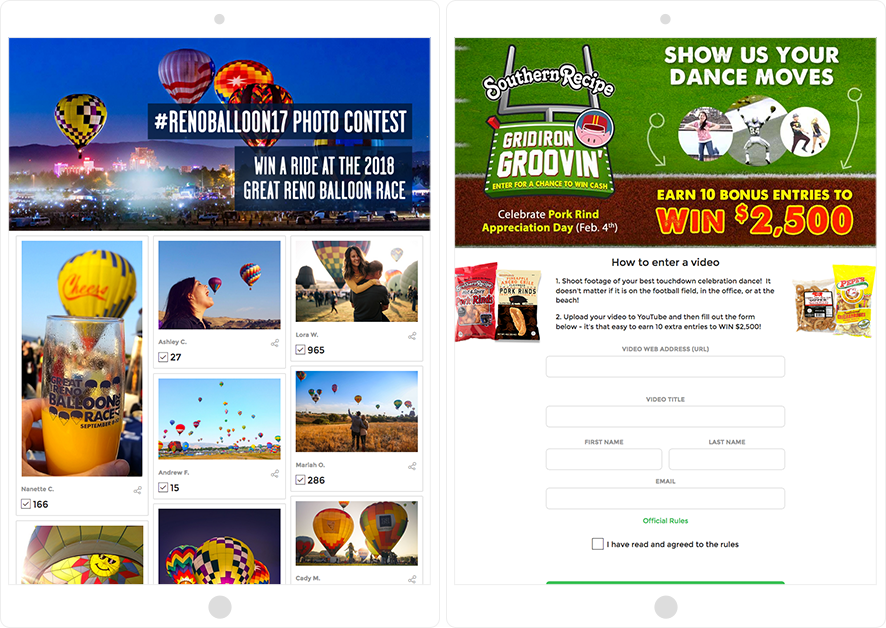
ShortStack is one among the pioneers within the business of enabling brands to make contests, giveaways, and other sorts of online competitions and promotions. Their flexible service enables you to jumpstart the creation of your promotions by customizing anybody of an extended list of templates.
ShortStack customers often prefer to conduct photo and video contests, which are promoted on Instagram, Facebook, Twitter, YouTube and more. Contests not only prompt fans and customers to publish content, but also cash in on what ShortStack calls “action-gating,” meaning users must submit contact information via a form to qualify for the competitions.
3. Curalate
Curalate describes itself as a user generated visual content platform and therefore the leader in “discovery-driven commerce.”
The platform may be a robust toolbox for increasing sales via social media. One compelling component of Curalate, Fanreel, enables e-commerce brands to “bring the surface in.” That’s, brands can easily gather UGC, secure approval to use it, and present it on-site to assist boost conversion.

4. TINT
TINT describes itself as a social media aggregator and content curation tool. The corporate introduces a few of interesting slants:
In addition to the broad “enterprise” use case, TINT positions its services specifically for hospitality and education markets.
TINT also showcases how the service is right for creating social media walls at events.
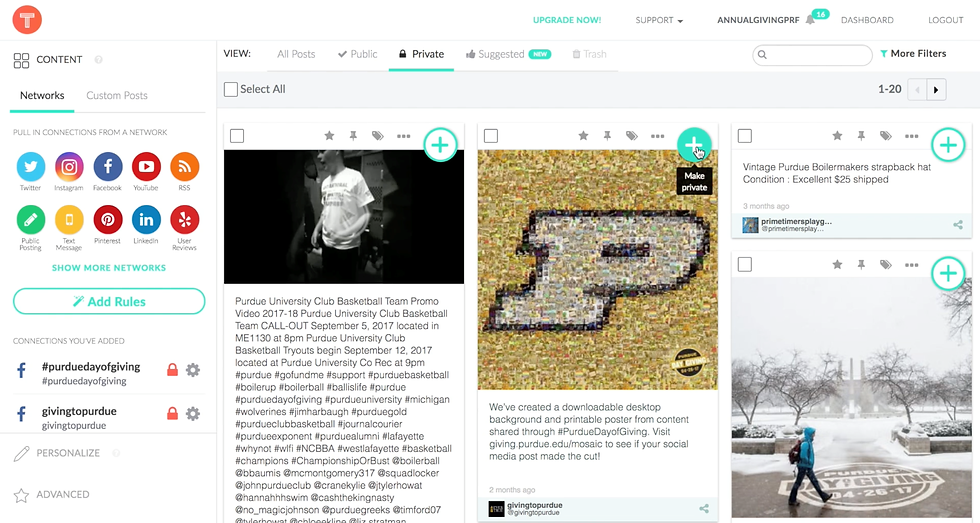
A video embedded within the post A Marketer’s Guide to Student Recruitment in 2018 offers a glance behind the scenes at how Purdue University uses the service to compile social mentions of their annual Purdue Day of Giving event on one page of their website.
5. CrowdRiff
CrowdRiff combines UGC discovery and content delivery. However, CrowdRiff takes a vertical market approach with services that cater specifically to travel and tourism brands.

#ThePalmBeaches campaign is an example of how CrowdRiff’s clients leverage user-generated content, word-of-mouth marketing, and therefore the power of social media to feature compelling visuals.
CrowdRiff also touts “smart digital asset management for both UGC and owned visuals.” The platform’s AI elements include a feature that tracks the performance of photos and videos that clients prefer to feature in galleries. The software then automatically features people who gain the foremost traction.
6. Olapic
Olapic’s a formidable player within the UGC space also . Clients earn content with a content engine, request it from influencers and employees with a creator platform, produce it by turning assets into motion-based content.

Olapic’s Content in Motion feature transforms UGC images into engaging, short-form videos which will be shared across a spread of digital channels.
7. Stackla
Stackla is another powerful player within the “collect and curate” realm, which touts the platform’s ability to gather social content from over 25 sources and use geolocation and visual recognition technology for UGC tagging.

Stackla’s Co-Pilot product introduces an AI element, which uses machine learning to detect patterns within the content its clients publish and measure engagement leading to predictive recommendations.
8. Pixlee
Pixlee is another robust UGC platform on a mission to assist brands market with the voice of their customers. However, it introduces a special influencer marketing element.

On the Pixlee site, they use the term “Social CRM” to explain the built-in influencer marketing functionality. This social CRM manages and connects with passionate customers and influencers and measures the results.
9. TurnTo
TurnTo offers what it calls a “suite of shopping assistance tools” to inform users more effectively. Its four-pronged product suite includes UGC solutions for ratings and reviews, visual reviews, check-out comments, and community Q&A (which struck me as its most original offering).
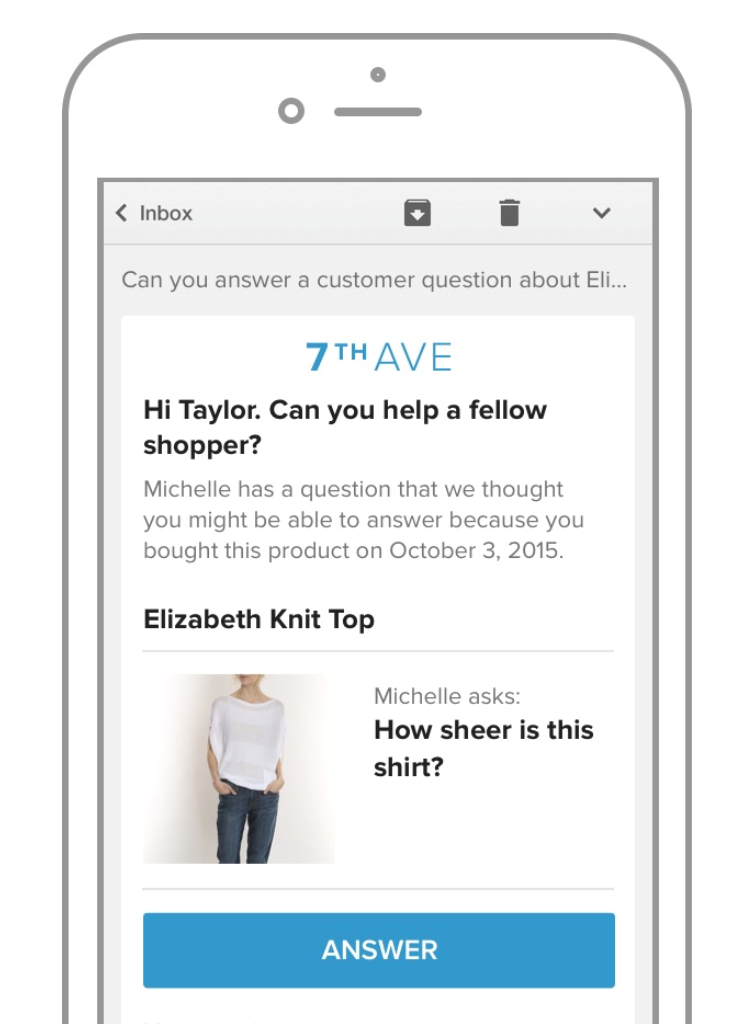
TurnTo’s goal is to attach customers with inquiries to people that already own the merchandise . Many questions are answered instantly because of a Q&A knowledgebase, which concludes from existing answers.
UGC Is Here, There, and Everywhere
“Many marketers have yet to understand the brand-building power of this immature but influential marketing discipline.” These words come from a 2014 white book on UGC by Forrester Consulting (commissioned by Bazaarvoice). Four years later, many marketers have indeed realized its power. Many SaaS companies have brought helpful solutions to the industry.
The market is ripe, and it will continue to grow in the coming years.

The graphic above depicts how brands leverage UGC throughout the customer lifecycle. It dates back to 2014 but makes crucial points that are even more relevant today.
As stated within the paper referenced above, the primary step to leveraging UGC is getting UGC. From there, brands should:
Go beyond ratings and reviews.
Invite customers to contribute content.
Give customers a reason to interact with the brand.
Engage with customers who engage together with your brand.
Designate has consistently increased conversion rates for its clients by engaging the most sophisticated metrics and tools to acquire, engage and convert target audiences across domains.Get in touch to know how we can boost your ROIs.


Comments